
Learn Arabic Faster: Proven Techniques and Mindset Shifts
- Posted by Aya Wahab
- Date September 9, 2025
Learning Arabic is one of the most rewarding challenges you can take on. With its rich history, unique script, and deep cultural ties, Arabic opens doors to new opportunities in work, travel, and personal connections. But many learners ask the same question: How to learn arabic fast?
The truth is, speed comes from two things: the techniques you use and the mindset you adopt. In this guide, we’ll explore both—practical strategies you can use today, and mental shifts that will keep you motivated for the long run.
Table of Contents
Toggle1. Start with Survival Arabic
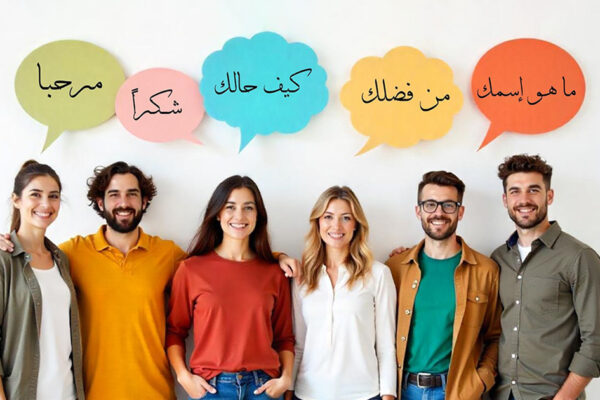
Don’t wait until you’re “fluent” to use Arabic. Start with Ammiyya (spoken dialect) if your goal is communication. Focus on phrases like:
- Greetings and introductions
- Ordering food and drinks
- Asking for directions
- Numbers, prices, and time
These give you immediate wins and confidence. You’ll quickly notice how locals respond positively when you try, even if you make mistakes.
Tip: The Arabic in Real Life course at AlBaher Arabic Language Center is designed exactly for this—it equips beginners with survival Ammiyya for daily interactions in Jordan.
2. Learn High-Frequency Words
Did you know that the 1,000 most common Arabic words cover about 80% of daily conversation? Don’t waste time memorizing rare vocabulary at the start. Focus on what you’ll actually use.
Create lists of everyday essentials:
- Family and relationships (mother, father, friend)
- Food and drinks
- Places (house, street, school, office)
- Basic verbs (go, come, want, like, work)
- Flashcards (physical or apps like
- Anki/Quizlet) help you review them daily.
3. Practice with Native Speakers
Books and apps are great, but language lives in conversation. Speaking with native speakers helps you:
- Fix pronunciation
- Learn natural expressions
- Get comfortable making mistakes
If you’re in Jordan, try practicing with shopkeepers, taxi drivers, or neighbors. If you’re abroad, join online conversation exchanges or book sessions with teachers who focus on spoken Arabic.
At AlBaher, our instructors combine structured lessons with real-life role-play so you practice ordering food, shopping, or making appointments—skills you’ll use immediately.
4. Immerse Yourself Daily
The fastest learners surround themselves with Arabic. Even 10–15 minutes a day can accelerate progress. Try these immersion tricks:
- Change your phone to Arabic
- Label items around your house with sticky notes
- Watch Arabic TV shows or listen to Arabic podcasts
- Read menus, signs, and advertisements when outside
The goal isn’t to understand everything, it’s to train your brain to see Arabic everywhere.
5. Focus on Listening First
Many learners rush to read and write, but if speed is your goal, start with listening and speaking. Your ears need to adjust to the sounds and rhythm of Arabic before fluency can develop.
Dedicate time each day to listening:
- Jordanian music or YouTube channels
- Short clips from series or movies
- Recorded dialogues from your textbook
- Repeat what you hear aloud—this “shadowing technique” improves pronunciation and memory.
6. Keep Grammar Simple (at First)
Arabic grammar is fascinating but can be overwhelming. Instead of memorizing endless verb charts, focus on practical sentence structures you’ll use daily:
- I want… (بدي / أريد)
- I like… (بحب)
- I’m going to… (رايح على)
Mastering a handful of patterns lets you express hundreds of sentences. Grammar depth will come naturally later.
7. Build Consistency, Not Intensity
Studying Arabic once a week for 3 hours won’t help as much as 20 minutes daily. Consistency rewires your brain faster.
A simple plan for beginners:
- 10 minutes: flashcards or vocabulary review
- 20 minutes: listening/shadowing
- 20 minutes: conversation or speaking practice
That’s less than an hour, but done every day, it’s powerful.
8. Adopt the Right Mindset
Techniques matter, but mindset is everything. Here are the key shifts:
- Progress over perfection: Making mistakes is proof you’re learning.
- Small wins: Celebrate ordering coffee in Arabic, even if your grammar isn’t perfect.
- Patience: Arabic is different from English—it takes time, but every word mastered brings you closer to fluency.
- Identity: Don’t think of yourself as “a student.” Think of yourself as “a speaker of Arabic.” This shift boosts confidence and motivation.
9. Get Professional Guidance
Self-study works, but guided learning with a teacher saves time. A good instructor will:
- Correct pronunciation early
- Explain cultural context
- Customize lessons to your goals
- Keep you accountable
At AlBaher Arabic Language Center in Amman, our approach blends Modern Standard Arabic (MSA) with Jordanian Ammiyya, so you build a foundation for both formal and daily use. Our teachers specialize in helping beginners gain confidence quickly.
Final Thoughts
Learning Arabic faster isn’t about cramming—it’s about smart strategies and the right mindset. Focus on survival phrases, practice daily, surround yourself with the language, and most importantly, enjoy the process.
If you’re ready to take the next step, we at AlBaher Arabic Language Center would be delighted to guide you. Our “Arabic in Real Life” program is the perfect place to begin, especially if you want to build speaking confidence in Jordanian Ammiyya.
Contact us today to book a trial class and start your Arabic journey with confidence!
FAQ
If your goal is everyday conversation, start with Ammiyya. If you need Arabic for work, media, or exams, MSA is essential. A blended approach often works best.
With 2–3 focused lessons per week plus daily practice, most learners can handle simple interactions within 2–3 months.
Arabic is different, not necessarily harder. The alphabet is mastered in weeks, and once you learn patterns, much of the language becomes predictable.
Speed depends on your definition of fluency. If you aim to be a poetic scholar, it takes time. But if you want to reach “Functional Fluency”—the ability to handle daily life, work meetings, and social gatherings—you can achieve this surprisingly fast. The trick is to focus on the Levantine dialect and “sentence mining,” where you learn chunks of language rather than isolated words. This approach bypasses the “translation lag” in your brain and builds immediate confidence.
For speaking and social integration, the Levantine dialect is significantly faster. It has a more streamlined grammar, fewer case endings, and a vocabulary that is built for speed and emotion. While Fusha is essential for reading formal documents, starting with the Shami dialect gives you “Quick Wins” that keep you motivated. At AlBaher, we use a hybrid method that introduces the script alongside the dialect so you gain literacy without slowing down your speaking progress.
The Pareto Principle applies perfectly to Arabic: 80% of daily conversations in the Levant use only about 20% of the language’s total vocabulary. By focusing on “High-Frequency Connectors”—words like Ya’ni, Tayyeb, and Hayk—and mastering the most common verb roots, you can participate in almost any social situation in Jordan within a few weeks. We prioritize these “Power Words” so you sound like a local long before you’ve mastered the entire dictionary.
Apps are great for “vocabulary snacks,” but they lack the “conversational pressure” required for speed. To learn fast, you need immediate feedback on your pronunciation and cultural usage. A structured center like AlBaher provides “High-Intensity Interaction,” forcing your brain to adapt to real-time conversation. While an app teaches you to recognize a word, a teacher teaches you how to weaponize that word in a real negotiation or friendship.
Jordan is a “24/7 Classroom.” When you study in Amman, every taxi ride, every falafel order, and every greeting with a neighbor is a mini-lesson. This is “Contextual Learning,” where your brain associates words with physical places and emotions, making them nearly impossible to forget. What takes an hour to memorize online is learned in five minutes when you are standing in the middle of the downtown Balad market.

You may also like

Learn Levantine Arabic Online or in Amman

Arabic Language Dialects: A Guide to Different Arabic Dialects