How to Say Hello in Arabic: Greetings, Replies, and Etiquette
- Posted by Aya Wahab
- Date November 24, 2026
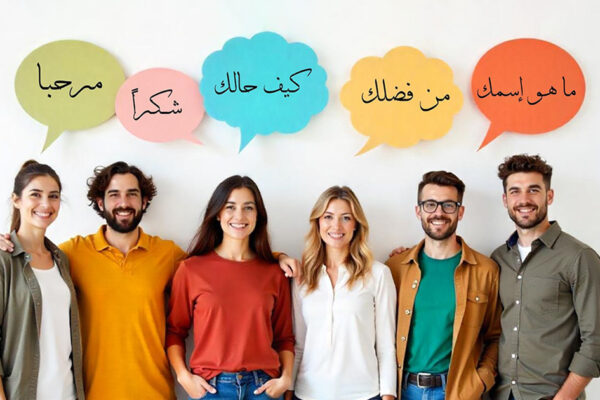
The simplest way to say hello in Arabic is marHabaa (مرحبا). The most widely used greeting across the Arab world is as-salaamu alaykum (السلام عليكم), which means “peace be upon you.” Learn these two, and you can greet almost anyone from Amman to Casablanca.
But Arabic greetings go further than one word. The right hello depends on the time of day, how formal the moment is, and the dialect people speak. And almost every greeting has a set reply. If someone greets you and you answer with the wrong phrase, or with nothing at all, it can feel cold, even if your Arabic is good.
This guide shows you how to say hello in Arabic language situations of every kind: the most common greetings, what to say back, how people say hello in Jordan, how to write hello in Arabic, and the etiquette that makes a good first impression.
Table of Contents
ToggleHow Do You Say Hello in Arabic?
If you only learn one word, make it marHabaa. It’s friendly, polite, and understood in every Arabic-speaking country, from shops and taxis to a first day at work. The word comes from a root linked to space and welcome, so it tells the other person they’re welcome, not just “hi.” From there, you can add greetings for specific moments: a warm welcome for guests, a morning greeting, or something short for close friends.
Common Ways to Say Hello in Arabic
Arabic has a greeting for almost every situation, but four of them cover most of what you’ll need day to day.
The Everyday Hello for Any Situation: MarHaba a
MarHabaa (مرحبا) is the classic Arabic hello and the safest place to start. It carries a sense of “you’re welcome here,” and it fits shops, cafés, taxis, first meetings, and most casual or semi-formal moments.
When someone says marHabaa to you, reply with marHabtein, which means “two hellos.” It’s a friendly way of giving back a little more than you received. A simple ahlan works just as well.
The Greeting Used Across the Arab World: As-Salamu Alaykum
As-salaamu alaykum (السلام عليكم) means “peace be upon you.” It’s the most widely shared greeting in the Arab world, from Morocco to the Gulf. People use it when entering a room, greeting a group, starting a phone call, or speaking with elders and strangers.
The reply is wa alaykum as-salaam (وعليكم السلام), “and upon you peace.” To show extra respect, add wa rahmatullaahi wa barakatuh, “and God’s mercy and blessings.”
The Warm Welcome for Guests and Visitors: Ahlan wa Sahlan
Ahlan wa sahlan (أهلاً وسهلاً) means “welcome,” and it’s the phrase of Arab hospitality. Hosts say it when you arrive at their home, shop owners say it when you walk in, and you’ll see it on signs at airports and hotels.
To reply, say ahlan bik to a man or ahlan biki to a woman. In the Levant, you’ll also hear ahlan feek and ahlan feekii.
A Quick, Friendly Hello between Friends: Salaam
Salaam (سلام) is the short, casual form of as-salaamu alaykum. It works like “hey” with friends, classmates, and people your age.
In many places, salaam also means “bye,” so the context tells you which one someone means. With elders or people you don’t know, the full as-salaamu alaykum is the better choice.
Arabic Greetings by Time of Day
Arabic greetings also change with the clock, and each one comes with its own reply.
Greeting Someone in the Morning: SabaaH al-Khayr
SabaaH al-khayr (صباح الخير) means “good morning,” or literally “morning of goodness.” Use it from early morning until around noon, at work, at home, or with neighbors.
The reply is SabaaH an-noor (صباح النور), “morning of light.” Friends in the Levant often play with this pattern and answer with SabaaH al-ward (“morning of roses”) or SabaaH il-full (“morning of jasmine”).
Greeting Someone in the Afternoon and Evening: Masaa al-Khayr
Masaa al-khayr (مساء الخير) means “good evening,” but people start using it in the afternoon. It covers most of the day after lunch, in shops, offices, and social visits.
The reply is masaa an-noor (مساء النور), “evening of light.” Keep in mind that masaa al-khayr is a greeting, not a goodbye. To say good night, use tisbaH alaa khayr (تصبح على خير).
Tip: Not sure which one fits the hour? MarHabaa works any time of day.
How to Reply to Arabic Greetings
In Arabic, a greeting is rarely left on its own. People answer with a reply that’s equal or warmer, often mirroring the original phrase. Here are the replies at a glance:
Greeting | In Arabic | Meaning | Reply |
MarHabaa | مرحبا | Hello | MarHabtein / Ahlan |
As-salaamu alaykum | السلام عليكم | Peace be upon you | Wa alaykum as-salaam |
Ahlan wa sahlan | أهلاً وسهلاً | Welcome | Ahlan bik / Ahlan biki |
SabaaH al-khayr | صباح الخير | Good morning | Sabaah an-noor |
Masaa al-khayr | مساء الخير | Good evening | Masaa an-noor |
Tip: If you forget the exact reply, don’t freeze. Repeating the greeting back with a smile is far better than staying silent. Over time, the right replies become automatic.
Formal vs Casual Greetings in Arabic
The right level of formality depends on who you’re talking to.
| Formal | Casual |
Greetings | As-salaamu alaykum, sabaaH al-khayr, masaa al-khayr | MarHabaa, ahlan, hala, salaam |
“How are you?” | Kayfa haluka? / Kayfa haluki? (MSA) | Keefak? / Keefik? (Levantine) |
Use it with | Elders, officials, clients, teachers, new people | Friends, classmates, people your age |
Tip: When in doubt, start formal. People will relax the tone themselves, and you can follow their lead.
How to Say Hello in Levantine Arabic
The hello in Arabic language textbooks isn’t always the one you’ll hear in Amman. In Jordan and the wider Levant, greetings are quicker, warmer, and often come in pairs.
How Jordanians Say Hello in Daily Life
In Jordan, you’ll hear marHabaa and ahlan all day, along with hala (هلا), a quick and cheerful “hi.” People who want to sound extra warm say hala wallah.
Jordanians also tend to greet more than once, stacking marHabaa, ahlan, and “how are you?” into the first few seconds. It’s a way of showing you’re truly welcome, and matching that energy makes you sound natural.
Asking “How Are You?” the Levantine Way
A Jordanian hello almost always comes with “how are you?” These are the phrases you’ll use most:
Phrase | Meaning | When to use it |
Keefak? / Keefik? | How are you? | To a man / to a woman |
Keef haalak? | How’s your state? | A slightly fuller “how are you?” |
Shou akhbarak? | What’s new? | Catching up with someone you know |
Mnih / Tamam | Good / Fine | Answering “how are you?” |
Al-hamdulillah | Thank God | A common answer, good day or not |
W inta? / W intii? | And you? | Turning the question back |
Welcoming Someone Warmly Like a Local
Hospitality is central to life in Jordan, and two phrases show it best. Ya hala means “you’re so welcome” and is said with real enthusiasm when a friend or guest arrives.
Tfaddal invites someone to come in, sit down, or help themselves to food or a drink. Using both yourself is one of the fastest ways to sound like a local.
How to Write Hello in Arabic
Writing Hello in Arabic Letter by Letter
Hello in Arabic is written مرحبا. Arabic is written from right to left, so the first letter you see on the right is the first sound you say. The word uses five letters:
Letter | Name | Sound |
م | Meem | “m” |
ر | Raaʾ | A rolled “r” |
ح | Ḥaaʾ | A breathy “h” from the throat |
ب | Baaʾ | “b” |
ا | Alif | A long “a” |
You’ll notice a small gap in the middle of the word. That’s because ر never connects to the letter after it, so the word is written in two connected pieces. You may also see it spelled مرحباً, with an extra mark at the end that reflects the formal pronunciation marHaban.
When to Use Arabic Script and When to Use Transliteration
Transliteration means writing Arabic with English letters, like “marHabaa.” It helps you say a word on day one, but there’s no single standard. The same word can appear as marHabaa, marHaban, or marHabaa, and sounds like ḥ get lost.
Arabic script is what people use on signs, menus, messages, and forms. Knowing it also improves your pronunciation, because you see exactly which letter is used. So use transliteration as a short bridge, then move to Arabic script as soon as you can.
Arabic Greeting Etiquette: Handshakes, Gender, and Respect
A few simple habits make your greeting feel respectful and natural:
- Shake with your right hand: It’s the polite norm, and handshakes are often longer and softer than in the West.
- Let the other person lead across genders: Between men and women, wait for a hand to be offered. Some people place a hand on their chest instead. If they do, return the gesture and smile.
- Greet elders first: Age carries real respect, so start with the oldest person and use a formal greeting.
- Greet everyone in the room: A general as-salaamu alaykum to the group is simple and polite.
- Don’t rush it: Greetings often include questions about health and family. Jumping straight to business can feel cold.
Common mistakes to avoid:
- Skipping the set reply: Answer as-salaamu alaykum with wa alaykum as-salaam, not just “hi.”
- Using the wrong gender form: Keefak? and ahlan bik are for men. Keefik? and ahlan biki are for women.
- Flattening the ḥ sound: In marHabaa, the ḥ is a breathy sound from the throat, not a plain English “h.”
How AlBaher Helps You Speak Arabic with Confidence
Saying hello is your first real conversation in Arabic, and getting it right sets the tone for everything after. Since 2006, AlBaher Arabic Language Center has taught Arabic to international learners in Amman, from complete beginners to professionals and diplomats.
Our native Jordanian instructors teach the greetings, replies, and everyday phrases people actually use, along with the etiquette behind them. You’ll practice speaking from your very first lesson, so these phrases become natural instead of memorized. Study in Amman, where you can use every greeting the same day you learn it, or online through live lessons from anywhere.
FAQs
MarHabaa is the most common everyday hello and works in almost any setting. As-salaamu alaykum, meaning “peace be upon you,” is the most widely shared greeting across the Arab world and is especially good for formal situations.
It has new sounds and a new script, but its grammar is simpler than MSA in many ways. With regular practice, beginners can handle simple everyday exchanges within a few months.
MarHabaa sits in the middle. It’s friendly and polite, so it works in casual and most semi-formal situations, like shops and first meetings. For very formal settings or with elders, as-salaamu alaykum is the safer choice.
Hello is written مرحبا (marHabaa). Write it from right to left using five letters: meem, raaʾ, Haaʾ, baaʾ, and alif. You may also see it spelled مرحباً in formal writing.
Keep it short and relaxed: ahlan, hala, or salaam all work well. In Jordan and the Levant, follow it with keefak? to a male friend or keefik? to a female friend to ask how they’re doing.

You may also like
How to Learn Levantine Arabic: A Practical Guide for Beginners

Arabic Language Dialects: A Guide to Different Arabic Dialects