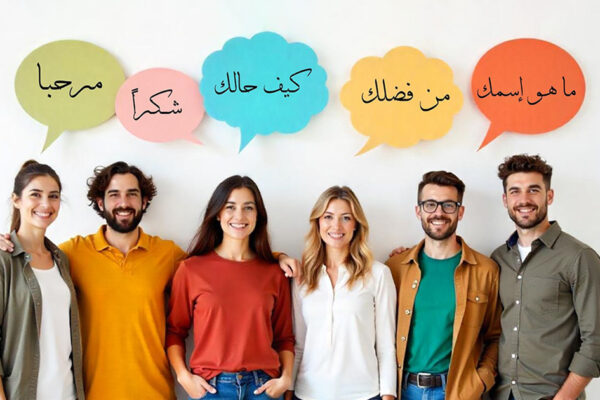

Arabic Language Dialects: A Guide to Different Arabic Dialects
- Posted by Aya Wahab
- Date September 28, 2026
Arabic is one language with many spoken dialects, alongside a shared formal variety called Modern Standard Arabic (MSA). These Arabic language dialects are used in everyday conversations across the Arab world, with differences in vocabulary, pronunciation, grammar, and expressions.
For example, “How are you?” can be kīfak? In Levantine Arabic, ezzayak? In Egyptian Arabic, and shlōnak? In Gulf Arabic. The words are different, but they come from the same Arabic language.
This guide explains the main Arabic dialect groups, where they are spoken, how spoken Arabic differs from MSA, how well speakers of different dialects understand each other, and which dialect makes the most sense for you to learn.
Table of Contents
ToggleWhat Are Arabic Language Dialects?
Arabic dialects are regional forms of spoken Arabic used in everyday communication. They developed as Arabic spread across different regions and communities, with each area developing its own pronunciation, vocabulary, grammar, and expressions.
The term Ammiyya refers broadly to spoken or colloquial Arabic used in everyday conversation. It includes regional varieties such as Levantine, Egyptian, Gulf, Iraqi, and Maghrebi Arabic.
Modern Standard Arabic (MSA) vs. Spoken Arabic
Modern Standard Arabic is the formal variety used across the Arab world for news, education, books, official documents, and other formal contexts.
Spoken Arabic is what people use in everyday conversations. It varies by region, so the Arabic spoken in Jordan is different from the Arabic spoken in Egypt or Morocco.
For example:
- MSA: Kayfa ḥāluka? — How are you?
- Levantine: Kīfak?
- Egyptian: Ezzayak?
- Gulf: Shlōnak?
A learner who wants to communicate naturally in a specific country should learn the spoken dialect used there.
Why Arabic Developed So Many Dialects
Arabic spread across a large geographic area, and regional varieties developed through centuries of local use. Contact with other languages and cultures also influenced pronunciation, vocabulary, and grammar.
The result is a group of closely related spoken varieties rather than one spoken form used identically across every Arabic-speaking country.
How Many Arabic Dialects Are There?
There is no single official number of Arabic dialects. Arabic is spoken in many regional varieties, which are commonly grouped into larger dialect families.
The main groups include:
- Levantine Arabic
- Egyptian Arabic
- Gulf Arabic
- Maghrebi Arabic
- Iraqi Arabic
- Other regional varieties, including
Sudanese, Yemeni, and Hijazi Arabic
Each group contains additional local varieties. For example, Jordanian, Lebanese, Syrian, and Palestinian Arabic are varieties within the broader Levantine group.
Arabic Dialects at a Glance
Speaker estimates vary depending on how researchers define each dialect group and whether they count only native speakers or additional speakers. The figures below are therefore approximate.
Dialect | Where It’s Spoken | Approx. Speakers | Example Phrase |
Levantine Arabic | Jordan, Syria, Lebanon, Palestine and surrounding areas | ~50–60 million | Kīfak? — How are you? |
Egyptian Arabic | Egypt | ~60–100+ million | Ezzayak? — How are you? |
Gulf Arabic (Khaleeji) | Gulf countries, including Saudi Arabia, UAE, Kuwait, Bahrain, Qatar, and Oman | ~30 million | Shlōnak? — How are you? |
Maghrebi Arabic | Morocco, Algeria, Tunisia and Libya | ~70 million | Labās? — Are you well? |
Iraqi Arabic | Iraq | ~35–40 million | Regional expressions vary |
These numbers should be treated as broad estimates rather than exact population counts because dialect boundaries do not always match national borders or official language statistics.
The Main Arabic Dialects and Where They’re Spoken
Levantine Arabic
Levantine Arabic is spoken across Jordan, Syria, Lebanon, and Palestine, with related varieties also spoken in neighboring areas.
Jordanian, Syrian, Lebanese, and Palestinian Arabic share many features but have differences in pronunciation, vocabulary, and everyday expressions.
For example, a common way to ask “How are you?” is:
Kīfak? – كيفك؟
Levantine Arabic is a practical choice for learners who plan to live, work, study, or travel in the Levant.
Egyptian Arabic
Egyptian Arabic is spoken in Egypt and is one of the most widely recognized spoken varieties of Arabic. Egyptian television, films, and music have also helped spread familiarity with the dialect across the Arab world.
A common way to ask “How are you?” is:
Ezzayak? – إزّيك؟
Learners who plan to spend significant time in Egypt will benefit from studying Egyptian Arabic for everyday communication.
Gulf Arabic / Khaleeji
Gulf Arabic, or Khaleeji, covers related varieties spoken around the Arabian Gulf, including Kuwait, Bahrain, Qatar, the UAE, eastern Saudi Arabia, and parts of Oman and Iraq.
A common Gulf expression is:
Shlōnak? – شلونك؟
Gulf Arabic itself includes regional differences, so learners should consider the specific country or community where they plan to use Arabic.
Maghrebi Arabic
Maghrebi Arabic, often called Darija, refers to spoken varieties used in Morocco, Algeria, Tunisia, and Libya.
These varieties have developed through contact with languages spoken in North Africa, resulting in vocabulary and pronunciation that can differ considerably from Arabic varieties in the Levant and Middle East.
Iraqi and Other Regional Varieties
Iraqi Arabic includes several spoken varieties used across Iraq. Other major regional varieties include Sudanese, Yemeni, and Hijazi Arabic.
These varieties show why choosing a dialect of Arabic based on where you plan to use the language is more useful than looking for one universal spoken dialect.
Where Classical Arabic Fits In
Classical Arabic is the historical form of Arabic associated with early Arabic literature and the Qur’an.
Modern Standard Arabic developed from the Classical Arabic tradition and serves as the formal written variety used today.
Spoken dialects developed through everyday use in different regions.
Can Speakers of Different Arabic Dialects Understand Each Other?
Yes, but understanding depends on the dialects involved and the speaker’s exposure to other varieties.
Speakers of closely related dialects, such as Jordanian and Palestinian Arabic, generally understand each other easily. Understanding becomes more difficult when dialects are geographically and linguistically farther apart, such as some Maghrebi varieties and eastern Arabic dialects.
Media exposure also matters. A person who regularly watches Egyptian films or Levantine television may understand those dialects more easily than someone with no exposure to them.
MSA provides a shared formal variety across the Arab world, particularly in writing, education, news, and official communication.
How Far Do the Dialects Differ from Modern Standard Arabic?
Spoken dialects differ from MSA in several important ways:
- Vocabulary: Everyday words can differ from their MSA equivalents.
- Pronunciation: The same Arabic sounds and words may be pronounced differently.
- Grammar: Spoken dialects use grammatical structures that differ from formal Arabic.
- Verb forms: Common spoken verb forms can differ from MSA.
- Expressions: Everyday phrases vary by region.
For example, “I want” can appear as:
- MSA: urīdu
- Levantine: biddi
- Egyptian: ʿāyez / ʿāyza
- Gulf: abghā
This is why knowing MSA does not automatically mean you will understand every everyday conversation. Learners who want to speak naturally need exposure to a spoken dialect.
Which Arabic Dialect Should You Learn First?
If your goal is everyday conversation, start with a spoken dialect such as Levantine Arabic. If you mainly need reading, writing, or formal Arabic, start with Modern Standard Arabic (MSA).
The right choice ultimately depends on where you plan to use Arabic and what you want to achieve.
Start with Your Goal, Not the Dialect
Before choosing a dialect, ask yourself:
- Where will I use Arabic?
- Am I planning to live or work in a specific country?
- Do I mainly want to speak and understand conversations?
- Do I need Arabic for academic or formal purposes?
- Do I want to connect with a particular community or culture?
If you have a specific destination, the local spoken variety is usually the most practical choice.
Why Levantine Arabic Suits Many Learners
Levantine Arabic is a practical choice for learners who want everyday Arabic in Jordan, Syria, Lebanon, or Palestine.
It is particularly useful for:
- Everyday conversation
- Living or working in the Levant
Travel - Building relationships with Arabic speakers
- Developing speaking and listening skills
For learners planning to study or live in Jordan, Jordanian Arabic provides the local spoken variety used in everyday communication.
When Modern Standard Arabic Is the Better Starting Point
Start with MSA if your primary goals are:
- Reading Arabic
- Academic study
- Formal writing
- News and media
- Official documents
- Formal communication across Arab countries
You do not have to choose one permanently. Many learners study MSA alongside a spoken dialect to develop both formal and conversational Arabic skills.
Common Challenges When Learning an Arabic Dialect
Learning a spoken dialect becomes easier with regular exposure, but beginners commonly face several challenges:
- Understanding natural speech: Native speakers use connected speech, informal expressions, and vocabulary that may not appear in beginner textbooks.
- Moving from MSA to a dialect: Learners who already know MSA need to adjust to different vocabulary, grammar, and pronunciation.
- Building conversational vocabulary: Everyday speech requires words and expressions that differ from formal Arabic.
- Choosing the right variety: With many different dialects of Arabic, learners need to select the variety that matches their destination and goals.
Regular conversation practice with experienced instructors helps learners become more comfortable with natural spoken Arabic.
How AlBaher Helps You Choose and Learn the Right Arabic Dialect
AlBaher Arabic Language Center helps students build Arabic skills around their current level, goals, and intended use of the language.
For learners interested in spoken Arabic in Jordan, AlBaher offers instruction focused on Jordanian Ammiyya, the spoken Arabic used in everyday communication in Jordan. The program is suitable for complete beginners as well as learners who already have experience with MSA and want to strengthen their spoken Arabic skills.
Students can also study Jordanian Arabic alongside MSA when they need both practical conversation skills and formal Arabic abilities.
FAQs
The most useful dialect is the one that matches where you plan to use Arabic. For everyday communication in Jordan, Syria, Lebanon, or Palestine, Levantine Arabic is a practical choice. For Egypt, Egyptian Arabic is the natural choice; for Gulf countries, choose the relevant Gulf variety.
Start with a spoken dialect if your main goal is everyday conversation. Start with MSA if you mainly need reading, writing, academic study, or formal communication. Many learners eventually study both.
There is no single easiest Arabic dialect. The best choice is the dialect that matches your goals and gives you regular opportunities to hear and use Arabic.
Levantine Arabic is widely recognized across the Arab world, especially because of regional media and entertainment. However, understanding is strongest among speakers who have regular exposure to Levantine Arabic, and some regional vocabulary and pronunciation differences remain.
Yes. Studying a spoken dialect alongside MSA gives learners both conversational and formal Arabic skills. The balance between the two can be adjusted according to your goals and study schedule.

You may also like

Learn Levantine Arabic Online or in Amman